
Suō — Where Winter Is Dyed in Deep Crimson
As Niseko enters its coldest season
The Warmth of the Irori
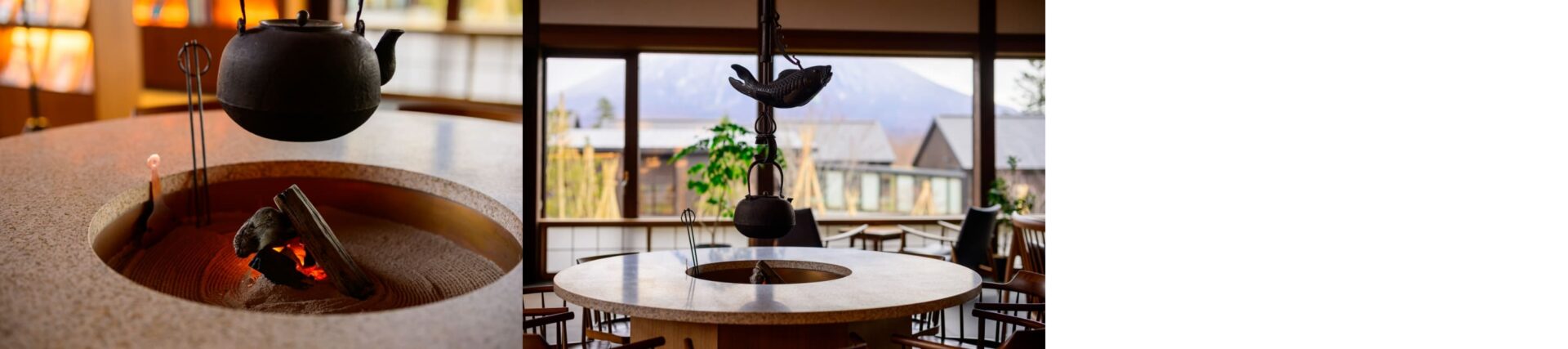
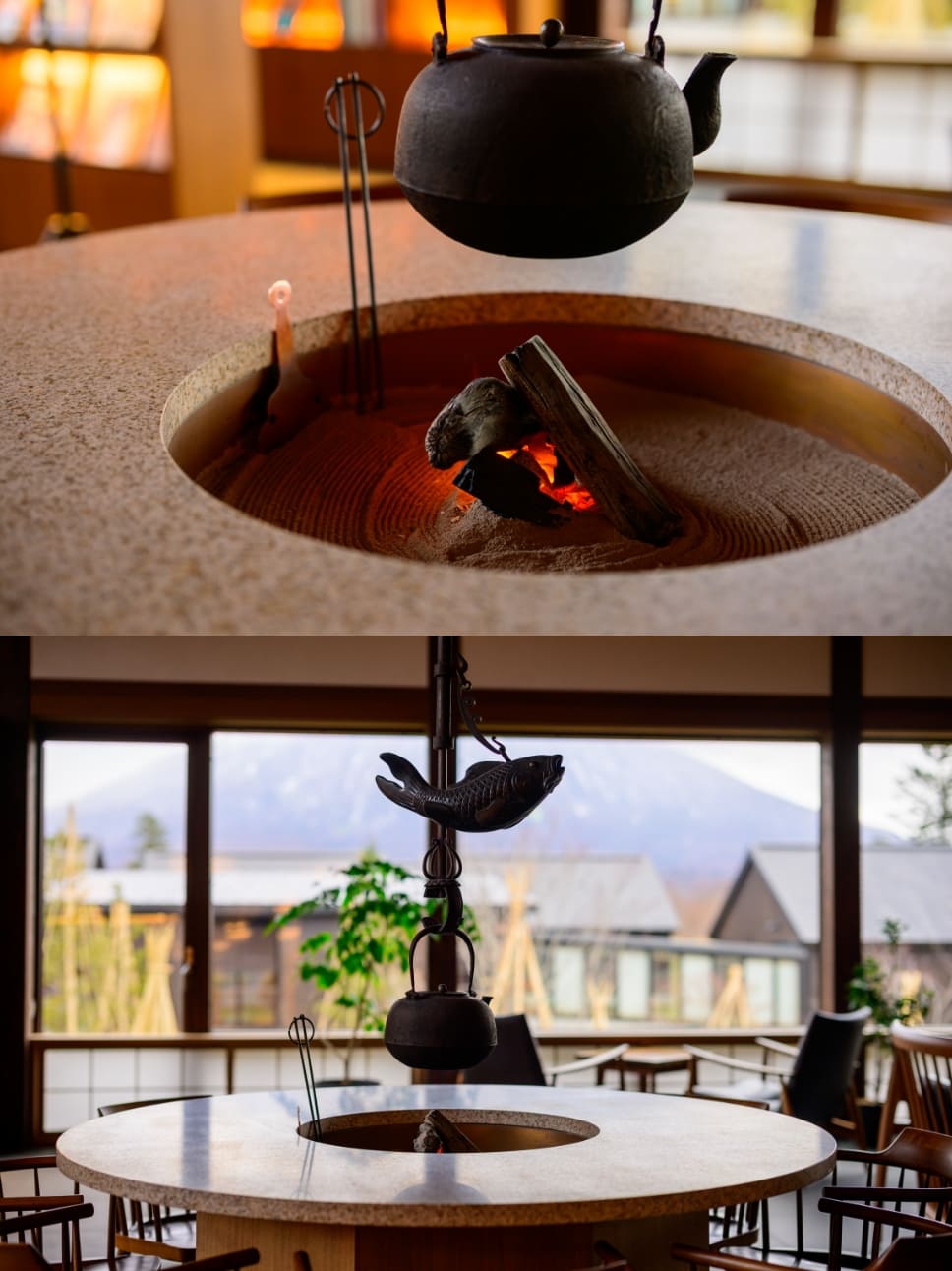
As Niseko enters its coldest season, winter arrives in profound stillness. Snow blankets the land, and all living things seem to rest in deep slumber. Welcoming guests who have traveled from afar is the gentle warmth of the irori, the traditional sunken hearth.
Only during this season does Raku Suisan light the fire in the lounge’s irori.
Carefully arranged binchōtan charcoal glows from its core, occasionally crackling as tiny sparks dance upward like fleeting stars before fading away. A subtle, toasty aroma drifts through the air, while the warmth of the fire softly embraces the cheeks, gently erasing memories of the cold outside.
The interplay of shadow and light, the shimmering reflections, the quiet rise of steam—gazing into the steady, dignified embers, one feels tensions long held within quietly dissolve.
The irori fire is more than flame; it is a light that warms the depths of the soul. Time spent gathered around it is a rare winter pleasure, enjoyed only during this fleeting season.
A Room Colored by Winter
Raku Suisan offers eighteen private, standalone villas, each named after one of the four seasons. Choosing a room that reflects the season of your stay is part of the experience. Among them, three rooms represent winter: Tsubaki, Hatsuyuki, and Suō. Here, we introduce Suō.
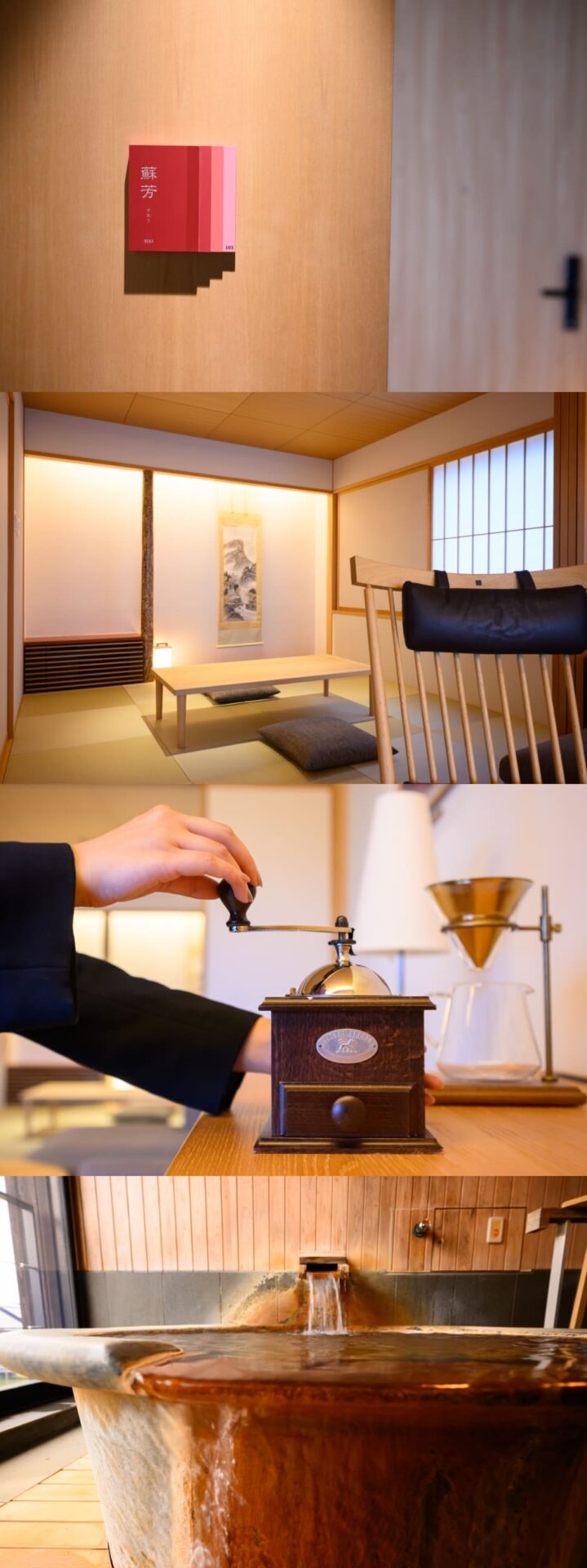
Suō is derived from a leguminous plant native to India and Malaysia, long valued for its use as a dye and in traditional medicine. Introduced to Japan during the Asuka period, it became a prized pigment among the aristocracy of the Heian era. The deep, dark crimson-purple known as Suō-iro was revered as a noble color and appears in classical Japanese literature such as The Pillow Book and Konjaku Monogatari.
Opening the door adorned with a gradated panel of Suō hues, guests are welcomed into a spacious, warm interior. Soft light filters through shoji screens in the living and bedroom areas, while a tatami space with a traditional tokonoma alcove offers quiet reflection. Japanese and Western elements coexist in effortless harmony, creating a residence designed for extended stays—to live, as one travels.
Winter nights are long and unhurried. Begin a coffee break by hand-grinding beans, listening to their crisp rhythm and breathing in their gentle aroma. Slowly pour hot water through the dripper, releasing a rich, enveloping fragrance. Savor the cup while gazing at the crystalline winter scenery outside—this is the luxury of unhurried time, found only while traveling.
Winter hot springs are especially restorative. As you ease into the bath, warmth travels from your fingertips inward, gradually melting the chill from your core. The Suō bath features a generous Shigaraki-ware ceramic tub, continuously filled with mineral-rich spring water. Through expansive glass windows, the winter landscape unfolds in serene panorama.

Encountering Japanese Culture
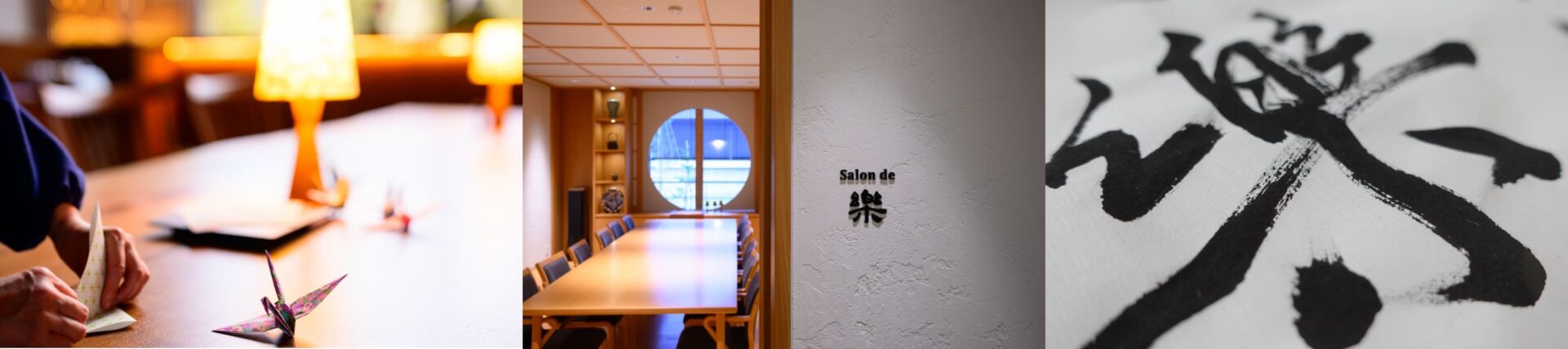
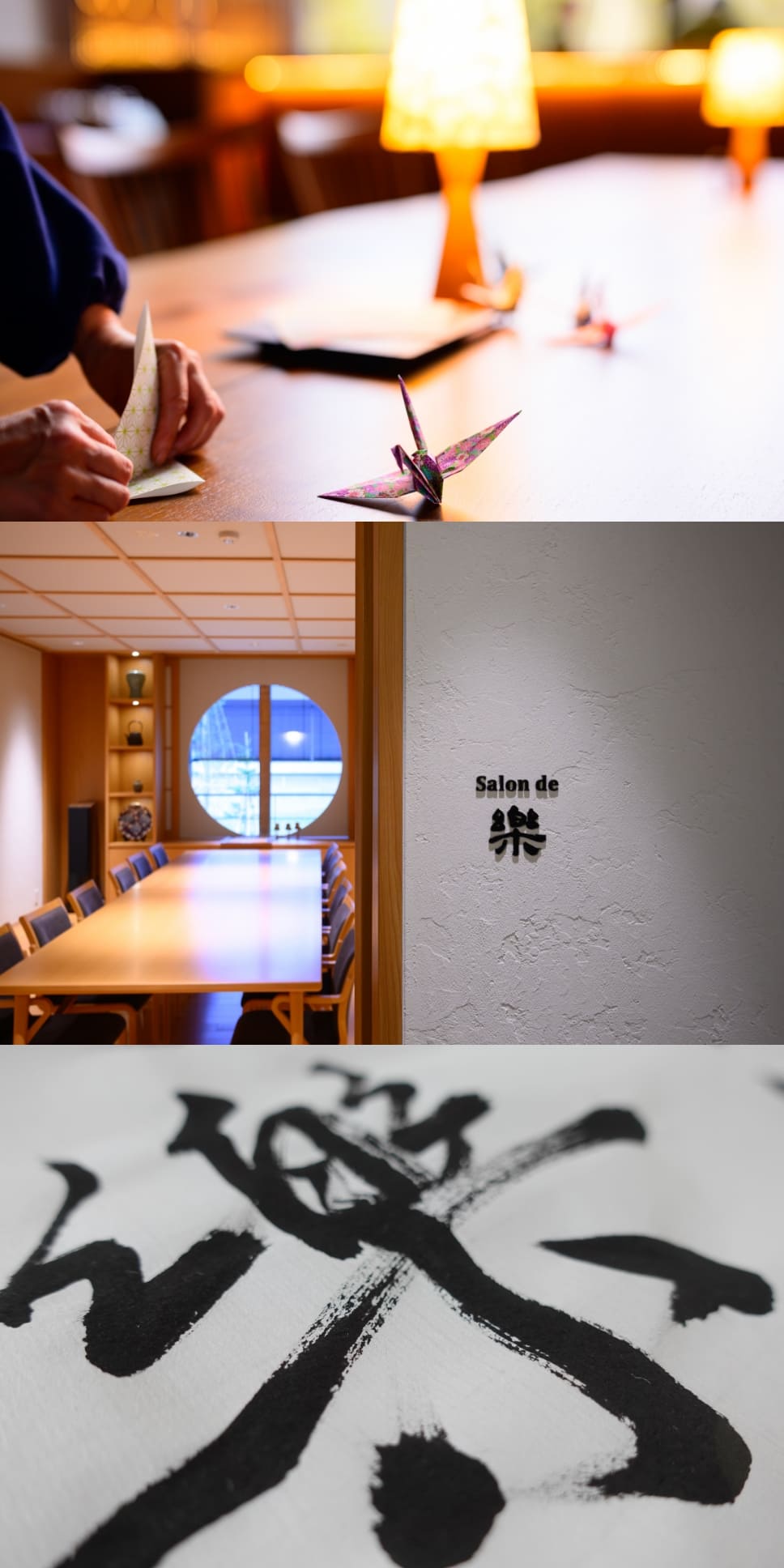
On the lounge tables rest vibrant sheets of chiyogami paper and delicate origami cranes. Origami, a uniquely Japanese art form, dates back to the 6th century when paper was first introduced from the continent. From a single sheet, infinite forms—cranes, flowers, animals, ornaments—are brought to life through simple folds. Its elegance and depth continue to captivate the world.
Choose a pattern, fold as you wish, and rediscover a childhood pastime familiar to many Japanese. Whether revisiting memories or encountering it for the first time, we invite you to experience the quiet joy of origami at Raku Suisan. Your completed creation is yours to keep, a small memento of the journey.
Another expression of Japanese tradition awaits. Guests may also experience shodō, the art of Japanese calligraphy, using brush, ink, and paper. Held at Salon de Raku, the classes are led by Naoko Yokoyama, a calligrapher based in Kutchan Town, and are designed to be approachable even for beginners.
Inspired by the majestic natural landscapes of Niseko, Ms. Yokoyama’s work expresses a “dialogue between nature and the heart” through nuanced ink gradations and the beauty of negative space. Each brushstroke carries a sense of life, embodying both the strength and tranquility of the surrounding wilderness.
The fragrance of ink, the tactile sensation of the brush, the subtle variations of tone and texture—moving the brush naturally draws the mind into stillness. Shodō is not merely a technical practice, but a refined Japanese art that cultivates inner balance and aesthetic awareness.
Next, We Step Into the Nighttime Setting
-
A Once-in-a-Lifetime Taste of Summer2026/08/03
Summer in Hokkaido is a season of extraordinary abundance. At Raku Suisan, guests can dine at three distinctive restaurants—Yukiai-tei, which specializes in innovative cuisine, the Japanese restaurant Irifune, and the teppanyaki restaurant Kaiō.
READ MORE
-
Summer Greens in Their Finest Light2026/07/21
At Raku Suisan, a refreshing fragrance of incense drifts gently through the air, while the lobby is filled with a cool serenity and quiet elegance.
READ MORE
-
The Arrival of Spring2026/05/29
Even in Niseko, long known for its deep winter snows, the arrival of spring begins to quietly reveal itself.
READ MORE
-
Preferences and Afterglow2026/02/09
On a Snowy Night, an Evening Meal Layered with Personal Taste
READ MORE
-
Suō — Where Winter Is Dyed in Deep Crimson2025/12/24
The Warmth of the Irori
READ MORE
-
Autumn Pleasures2025/10/16
A Welcoming Cup of Tea and Seasonal Confectionery
READ MORE
-
Change of the four seasons2024/02/14
We celebrated the first day of spring on February 4th of this year.
READ MORE
Niseko is still covered in deep snow, but according to the Japanese calendar, it's already spring.
-
Raku Suisan in NISEKO WINTER 2022-20232023/08/01
We will be delighted to deliver the spring, summer, autumn and winter of the mountain nostalgia of Mt.Yotei in a video.
READ MORE
-
Rich water and Greenery2023/07/29
Rich water and Greenery
READ MORE
-
SEASONAL STORY VIDEO2023/04/10
We will be delighted to deliver the spring, summer, autumn and winter of the mountain nostalgia of Mt.Yotei in a video.
READ MORE
-
Spring is on the way2022/04/30
We at Raku-Suisan is welcoming spring for the 2nd year.
READ MORE
As the snow on Mt. Yotei begins to melt, greenery slowly spreads on the mountain’s surface.
Now is the season where a beautiful contrast between the snow and flowers on the mountain top.
-
Color2022/03/28
The transition of the four seasons is very clear in Japan. The temperature difference here in Hokkaido make the outline standing out clearly. The original scenery surrounding Raku Suisan also seems to welcome all guests by reflecting the colors of nature in each season.
READ MORE
-
The sound of spring2022/02/22
Soft and warm sunlight shining through the cold air of February with snow still falling down in Kabayama area of Niseko. The sound of all lives can be heard and that is a sign of spring is coming soon.Crops that are available in season are used to create a special dish for you.
READ MORE
-
Living together with snow2022/01/18
Dry, soft and light is the specialty of “Powder Snow” in Niseko. It’s so fluffy that it won’t melt in your hand when you touched it.
READ MORE
Time seems to slow down gradually and make the life with snow so enjoyable that you wish to stay longer in this atmosphere.
-
Hot Spring Treatment2021/12/15
Japan is blessed with hot spring resources and hot spring treatment culture started long time ago.
READ MORE
It is said to be the prototype of recreation and recuperation that heal the body and mind with the effects through a long stay at a hot spring facility.
-
Winter’s Preparation2021/11/17
The land of Niseko sleeps quietly in the deep snow. However, there are plenty of ingredients that are in season even in winter.
READ MORE
You will fully enjoy the special winter menu created at this time of the year.
-
Harvest2021/10/20
Hokkaido is in autumn season now. Even on a sunny day, the cheeks feel cold in the autumn breeze. Dusk is getting faster day by day.
READ MORE
However, a wide variety of ingredients reach harvest season and bring blessings to Hokkaido.
-
Five Senses2021/09/24
Enjoy Teppanyaki with Autumn Food.
READ MORE
5 senses that you can enjoy during cooking:
Look at the ingredients, Listen to the sizzling sound of cooking, Smell the aroma, Taste the Umami and Touch the food
-
Fermentation2021/08/04
Since ancient times, mankind has cultivated a technique called "fermentation" as a method for preserving food.
READ MORE
Vinegar, which is said to be the oldest seasoning in Japan. Soy sauce, miso, and mirin, which are indispensable for Japanese food are fermented seasonings.
Both are traditional Japanese tastes and origins.
-
Fumizuki2021/07/09
Niseko is getting greener in season at the moment.
READ MORE
It's the season when Hokkaido is overwhelmed with its fresh produce.
-
Taishi2020/12/14
Niseko's nature has been secretly nurtured by the eternal flow of time. The ever-changing facial expressions of power and tens of thousands of endless repetitions created the landscape of Niseko.
READ MORE
-
PROLOGUE2020/02/03
The unspoilt magnificent natural beauty and scenery reproduces the modest activities of the people who live there merge with the Shimo (the first ward only ruby / Shiribeshi) district and Niseko scenery.
READ MORE